HNZXIB — Evaporator
Precision Laboratory Solutions for Research Scientists and Pharmaceutical Innovators
HNZXIB stands as a dedicated partner for research scientists, university laboratories, and pharmaceutical companies seeking reliable vacuum distillation equipment. Based in Zhengzhou, China, the company has built its reputation on delivering quality laboratory products backed by exceptional service to customers worldwide. Understanding that laboratory work demands unwavering precision, the brand engineers each rotary evaporator to meet the exacting standards required in chemistry, pharmaceutical development, and extraction applications.
The best HNZXIB evaporator models address the specific challenges faced by professionals working with volatile solvents and heat-sensitive compounds. Every unit incorporates thoughtful design elements that prioritize both safety and efficiency, from advanced gas-tight vacuum systems to corrosion-resistant construction materials. This attention to detail has made the brand a trusted choice for institutions where experimental accuracy directly impacts research outcomes and product development timelines.
Beyond manufacturing excellence, HNZXIB demonstrates its commitment to the scientific community through comprehensive support and FDA/CE certified equipment that meets international laboratory standards. Whether the application involves concentrating pharmaceutical compounds, recovering valuable solvents, or conducting routine organic chemistry procedures, the product line delivers consistent performance that researchers can depend on day after day.
Complete Rotary Evaporator Systems From Entry-Level to Industrial Scale
The product catalog spans a thoughtfully designed range of rotary evaporator configurations to accommodate diverse laboratory requirements and budget considerations. Entry-level 1L systems provide an accessible starting point for teaching laboratories and smaller research operations, while 5L models deliver the capacity needed for production-scale pharmaceutical work and high-volume extraction processes. Each capacity tier maintains the same commitment to precision engineering and material quality that defines the brand.
Flexibility extends beyond flask capacity to encompass lifting mechanisms, power specifications, and system configurations. Manual lifting models offer straightforward operation and cost efficiency for laboratories with established workflows, while automatic lifting versions provide enhanced convenience and reproducibility for high-throughput environments. The availability of both 110V/60Hz and 220V/60Hz options ensures compatibility with electrical standards across North America and international markets.
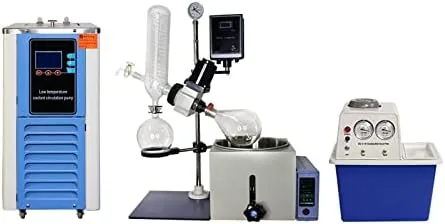
Complete rotary evaporator kits bundle essential components — including vacuum pumps and cooling chillers — into integrated systems ready for immediate deployment. These turnkey solutions eliminate the complexity of sourcing compatible accessories while guaranteeing optimal performance from the first day of operation. Individual units also remain available for laboratories looking to expand existing setups or replace specific components within their current infrastructure.
The EL Gas-Tight System: International Engineering Standards Applied
At the heart of every rotary evaporator lies the proprietary EL gas-tight system, representing the integration of international advanced vacuum technology into accessible laboratory equipment. This engineering approach ensures stable vacuum performance throughout extended evaporation cycles, maintaining the low-pressure environment essential for efficient solvent removal at reduced temperatures. The system's reliability translates directly into reproducible results and minimized experimental variability.
The gas-liquid separator incorporated into this design prevents reflux conditions that can compromise sample purity and waste valuable compounds. By maintaining clear separation between vapor and liquid phases during operation, the system protects experimental integrity while maximizing recovery rates. Polytetrafluoroethylene (PTFE) sealing materials at all interface points provide chemical resistance against aggressive organic solvents, extending service life even under demanding conditions.
Temperature control precision reaches ±0.1°C through PID regulation technology, allowing researchers to maintain exact thermal conditions throughout concentration and drying procedures. This level of accuracy proves particularly valuable when working with heat-sensitive pharmaceutical compounds where even minor temperature fluctuations can trigger degradation or unwanted reactions. The digital display provides real-time feedback, enabling operators to monitor and document process parameters with confidence.
Essential HNZXIB Evaporator Features for Professional Laboratory Applications
- High Borosilicate Glass Construction Laboratory-grade glassware provides exceptional thermal stability, corrosion resistance, and tolerance to sudden temperature changes when working with organic solvents.
- 304 Stainless Steel Water Bath Premium stainless steel construction ensures durability and corrosion resistance throughout years of continuous laboratory use.
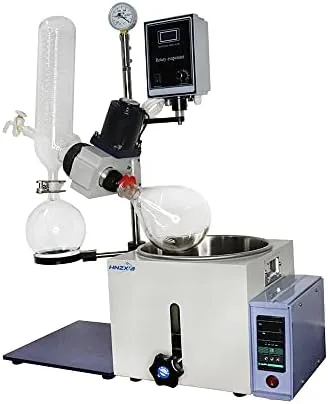
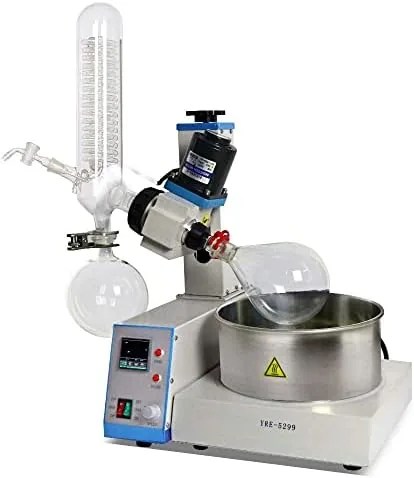
- Digital Display with Stepless Speed Control Intuitive interface allows precise rotation speed adjustment from 0-120rpm while providing clear real-time operational feedback.
- Vertical Coiled Condenser Design Efficient condensation geometry maximizes solvent recovery rates while maintaining compact laboratory footprint.
- PTFE Interface Seals High-temperature and corrosion-resistant sealing materials maintain vacuum integrity across diverse chemical environments.
- FDA/CE Certification Equipment meets international laboratory standards, supporting regulatory compliance in pharmaceutical and research applications.
Laboratory Favorites: The RE-201D, RE-501, and R-1005 Systems
The HNZXIB Lab Rotary Evaporator RE-201D represents the ideal entry point for laboratories establishing vacuum distillation capabilities. Its 1L evaporation flask capacity suits routine organic synthesis, small-batch concentration work, and educational demonstrations. The manual lifting mechanism provides straightforward operation, while the 304 stainless steel water bath and high borosilicate glass components deliver professional-grade durability at an accessible price point.
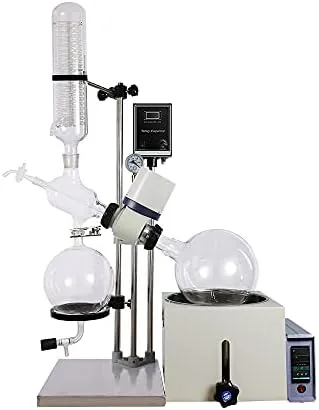
For laboratories requiring greater throughput, the RE-501 series offers 5L evaporation capacity with a 3L receiving flask, accommodating production-scale pharmaceutical concentration and larger extraction operations. Available in both 110V and 220V configurations, these systems maintain the same precision engineering and material quality while scaling up operational volume. The digital display and stepless speed control ensure consistent process parameters regardless of batch size.
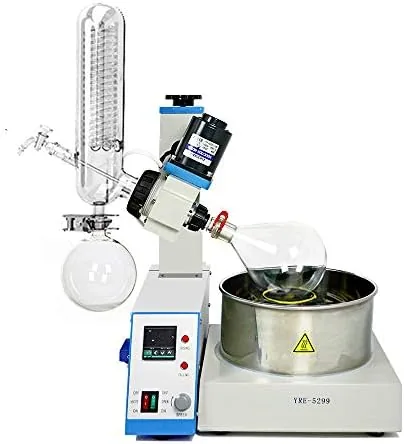
The R-1005 model introduces electric lifting functionality for laboratories prioritizing workflow efficiency and operator convenience. This automated height adjustment feature proves particularly valuable during repetitive procedures, reducing operator fatigue while ensuring precise, reproducible positioning of the heating bath. Combined with a 50mm rotary flask mouth diameter, the system accelerates loading and cleaning procedures without sacrificing performance.
High Borosilicate Glass Meets 304 Stainless Steel Construction
Material selection fundamentally determines rotary evaporator performance, longevity, and chemical compatibility. The glassware components utilize high borosilicate glass — the same laboratory-grade material employed in premium beakers, flasks, and reaction vessels worldwide. This glass formulation offers exceptional thermal shock resistance, allowing rapid temperature transitions without risking fracture. Its chemical inertness ensures compatibility with the full spectrum of organic solvents encountered in chemistry and pharmaceutical applications.
The heating bath construction employs 304 stainless steel, an alloy renowned for its corrosion resistance and durability in laboratory environments. This material selection prevents rust formation and resists degradation from water bath additives, cleaning agents, and accidental chemical exposure. The polished surface facilitates easy cleaning and maintains professional appearance throughout extended service life. Unlike lower-grade alternatives, 304 stainless steel withstands the thermal cycling inherent to rotary evaporator operation without warping or structural degradation.
Sealing components throughout each system utilize polytetrafluoroethylene (PTFE), commonly known by the brand name Teflon. This fluoropolymer provides outstanding chemical resistance against virtually all organic solvents while maintaining flexibility across the operational temperature range. PTFE seals contribute directly to the EL gas-tight system's vacuum performance, ensuring consistent low-pressure conditions essential for efficient evaporation. The combination of these three material systems — borosilicate glass, 304 stainless steel, and PTFE — creates a unified platform engineered for demanding laboratory work.
Solvent Recovery Rates and Concentration Efficiency in Real Laboratory Conditions
Laboratory professionals consistently report high evaporation efficiency and solvent recovery rates when utilizing these rotary evaporator systems. The vertical coiled condenser design maximizes vapor contact with cooling surfaces, converting solvent vapors back to liquid phase with minimal losses to the vacuum system. This efficiency translates directly into cost savings on expensive solvents and reduced environmental impact from waste disposal.
The precision PID temperature control system maintains bath temperatures within ±0.1°C of setpoint, preventing the thermal degradation that can occur when heat-sensitive compounds encounter excessive temperatures. Pharmaceutical researchers particularly value this accuracy when concentrating active ingredients that may lose potency or form unwanted degradation products under less controlled conditions. The digital display provides continuous verification that process parameters remain within specification.
Operational durability extends beyond individual components to encompass overall system reliability. The gas-tight vacuum system maintains consistent low-pressure conditions throughout extended runs, eliminating the pressure fluctuations that can disrupt evaporation rates and compromise experimental reproducibility. Users report that equipment performs consistently across months and years of regular use, with predictable maintenance requirements and readily available replacement components. This reliability allows laboratories to plan workflows confidently, knowing that equipment will perform as expected when needed.
Operating Your HNZXIB Evaporator: Setup and Daily Use Protocols
- Initial Assembly Connect all glassware components using the provided clamps and PTFE seals, ensuring secure but not overtightened connections to maintain vacuum integrity.
- Water Bath Preparation Fill the stainless steel bath with distilled water to the indicated level, adding bath fluid additives if extended high-temperature operation is anticipated.
- Vacuum System Connection Attach vacuum pump to the designated port and verify all seals are properly seated before applying vacuum to the system.
- Temperature Programming Set bath temperature using the digital controller, allowing adequate warm-up time before introducing samples to ensure stable thermal conditions.
- Rotation Speed Adjustment Begin with lower rotation speeds and gradually increase to operational rpm, preventing splashing and ensuring uniform thin-film formation on flask surfaces.
- Condenser Cooling Activate chiller circulation before beginning evaporation, verifying adequate coolant flow through the condenser coils.
Vacuum Pressure Monitoring and Over-Temperature Protection Systems
Safe operation begins with understanding the integrated protection systems built into each unit. The automatic over-temperature alarm activates when bath temperatures exceed safe operational limits, alerting operators to potential issues before they escalate to equipment damage or sample loss. This protection proves particularly valuable during unattended operation or when processing compounds with unknown thermal stability profiles.
Vacuum pressure management requires attention to system integrity and pump maintenance. Before each session, visually inspect all glassware for cracks or chips that could compromise vacuum performance or present safety hazards. Verify that all PTFE seals are properly seated and free from debris that could prevent adequate sealing. The gas-liquid separator should be checked and emptied regularly to prevent carryover into the vacuum system.
Rotation speed selection should consider both sample characteristics and flask fill level. Overfilling evaporation flasks or operating at excessive speeds can cause bumping — sudden violent boiling that projects sample material into the condenser system. Starting with conservative rotation speeds and gradually increasing allows operators to identify optimal parameters for each specific application while minimizing the risk of sample loss or contamination.
The Perfect Equipment Choice for Pharmaceutical Development and University Research
Pharmaceutical Applications
- Drug compound concentration and purification
- Solvent recovery in synthesis workflows
- Heat-sensitive API processing
- Quality control sample preparation
- Scale-up protocol development
Academic Research Uses
- Organic chemistry teaching laboratories
- Natural product extraction research
- Biochemistry concentration procedures
- Graduate research projects
- Analytical sample preparation
Selecting the Right Evaporator Capacity and Configuration
Choosing the appropriate evaporator model requires careful consideration of current needs and anticipated future requirements. The 1L systems excel in teaching environments, individual researcher workstations, and applications involving expensive or limited-quantity samples where smaller batch processing proves advantageous. These compact units occupy minimal bench space while delivering the full range of precision controls found in larger models.
Laboratories processing larger volumes or requiring higher throughput should consider 5L capacity systems. These units accommodate production-scale concentration work, bulk solvent recovery operations, and applications where processing efficiency directly impacts project timelines. The RE-501 and R-1005 models in this capacity range offer manual or electric lifting options to match workflow preferences and budget parameters.
Power supply compatibility deserves attention during selection, particularly for international operations or laboratories with specific electrical infrastructure. The 110V/60Hz models serve North American installations directly, while 220V options accommodate international standards. Complete kit configurations — including vacuum pump and cooling chiller — simplify procurement for new laboratory setups and ensure component compatibility without additional engineering review. When purchasing to buy HNZXIB evaporator systems, consider available bench space, electrical capacity, and cooling water access alongside processing volume requirements.
HNZXIB Evaporator Versus Leading Laboratory Equipment Competitors
| Feature | HNZXIB | Heidolph | IKA |
|---|---|---|---|
| 1L System Price Range | Budget-Friendly | Premium | Premium |
| 5L System Availability | Multiple Options | Limited Models | Multiple Options |
| Glass Material | High Borosilicate | Borosilicate | Borosilicate |
| Water Bath Material | 304 Stainless Steel | Stainless Steel | Aluminum/Steel |
| Temperature Precision | ±0.1°C PID Control | ±1°C | ±0.5°C |
| Vacuum System | EL Gas-Tight | Standard Seals | Standard Seals |
| FDA/CE Certification | Yes | Yes | Yes |
| 110V/60Hz Options | Standard | Available | Available |
| Complete Kit Bundles | Yes | Separate Purchase | Limited |
Specifications based on manufacturer published data for comparable capacity models.
Maintaining Glassware, Seals, and Water Bath Components
- Daily Glassware Cleaning Rinse all glass components with appropriate solvents immediately after use, then wash with laboratory detergent and distilled water to prevent residue buildup.
- PTFE Seal Inspection Examine sealing surfaces weekly for wear, scoring, or chemical degradation that could compromise vacuum performance.
- Water Bath Maintenance Drain and refill bath water regularly to prevent mineral buildup and biological growth that can affect heating efficiency.
- Condenser Care Periodically inspect condenser coils for blockages or residue accumulation that could reduce cooling efficiency.
- Vacuum Pump Service Follow manufacturer guidelines for oil changes and filter replacement to maintain optimal vacuum levels.
- Storage Procedures When not in use, store glassware in padded containers and leave bath empty to prevent stagnant water issues.